The best website designers for small business build sites the owner can edit, that work on a phone, that show up in local search and that cost a predictable amount to run each year. They ask about your customers before they talk about design, they put the domain and hosting in your name, and they explain what the site will cost after launch as clearly as what it costs to build. xCreative™ designs websites for small businesses in Melbourne and interstate from our Chadstone studio, and the checklist below is what we tell owners to look for, whoever they hire.
Almost every Australian business is a small one. ASBFEO’s figures, based on ABS data, put 97.3 per cent of businesses in the small category in June 2025. Most of them do not have a marketing manager, so the website designer is often the only digital specialist they deal with. That makes the choice matter more, not less.
Website builder or website designer?
A do-it-yourself builder can be enough for a sole trader who needs a phone number, a list of services and a contact form, and who has the time to write and photograph it. A designer earns their fee when the site has to win work against competitors: when it needs a page for each service, real photography, local search set up properly and a structure that grows with the business. If you are unsure, ask a designer what they would do that a builder cannot, and judge the answer.
The eight checks
1. You can edit it yourself
Ask for a demonstration of changing a price, a photo and a staff name. If it needs the designer every time, the site will go stale. Most small business sites we build run on WordPress for this reason.
2. It works on a phone first
Most local customers will see the site on a phone. Check the designer’s past sites on yours: call button visible, menus usable with a thumb, pages that load on mobile data.
3. One page per service
Customers search for the service and the suburb, not your business name. A site with one page per service, written in the words customers use, gives Google something to match. One page listing everything rarely ranks for any of it.
4. Local search is part of the build
Your business name and phone number should match exactly, along with the address, across the site and your Google Business Profile, which Google expects to follow its guidelines for representing your business. A designer who links the two, adds the suburbs you serve and sets up local SEO basics at launch saves you months.
5. You own the domain, hosting and logins
The domain should be registered to your business. Under auDA’s rules a .com.au needs an Australian presence, so check the registrant is your entity. Hosting and admin access should be in your name, with the designer given a login of their own.
6. Running costs are written down
Ask for the yearly running cost in writing, covering hosting and licences as well as updates and support. If you do not want to manage updates, ask about website maintenance and what it covers.
7. Real work in businesses like yours
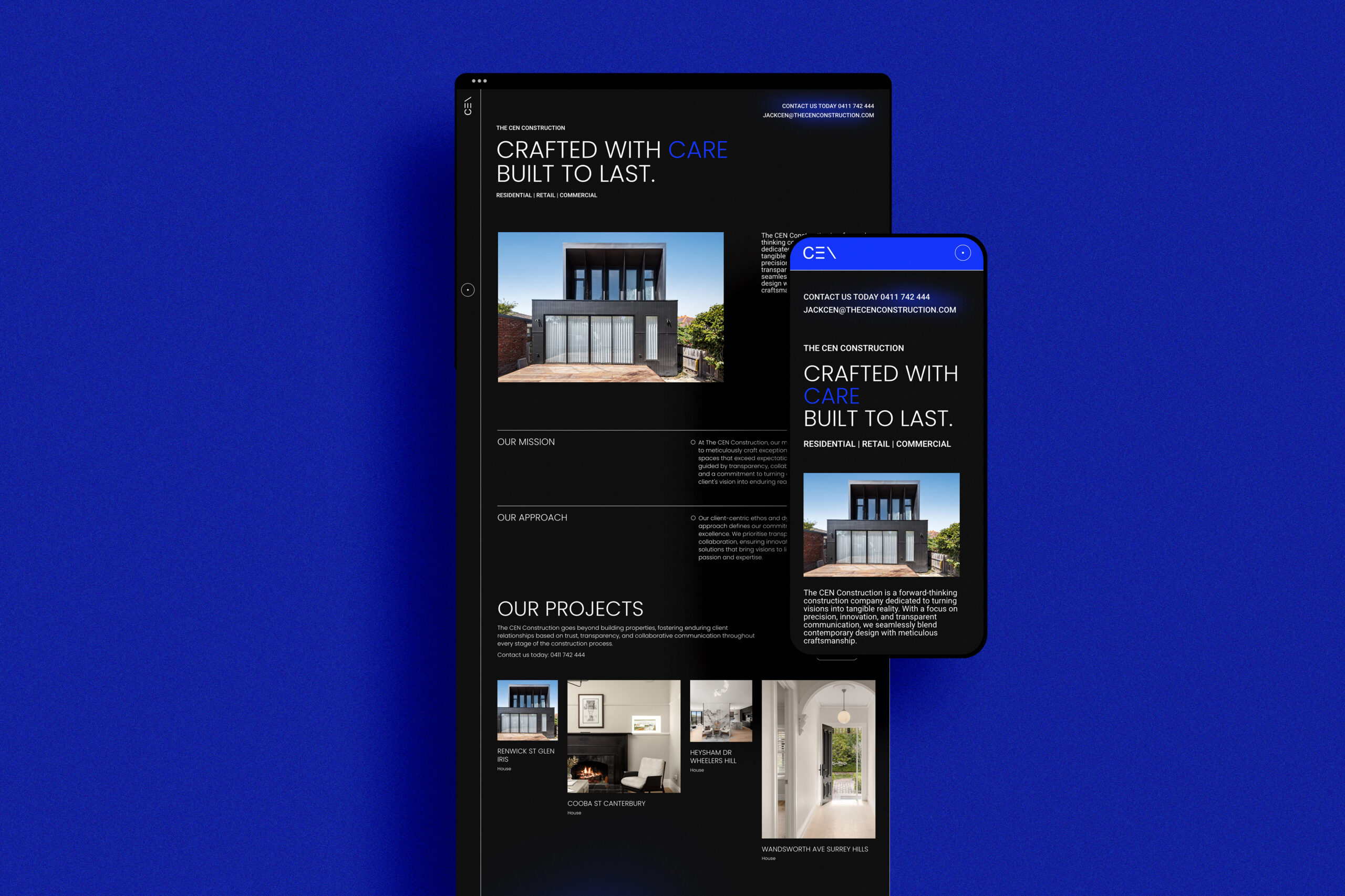
A builder, a café and an accountant need different sites. Ask for live examples close to your trade. Our site for The Cen Construction, pictured above, shows how a builder’s projects can lead the site.
8. A designer who asks questions
Good designers ask who your customers are, what you want them to do on the site and which competitors you lose work to. A quote sent without those questions is a guess.
What a sensible budget conversation sounds like
A designer who will not discuss budget until the end is hard to plan around. A good one asks for your range early, then tells you what fits inside it and what could wait for a second stage: an online shop, a booking system or extra service pages. Starting with a smaller site that is done properly usually beats a large site that is half finished. Ask what the second stage would cost and when it would make sense, so the first build leaves room for it.
Local designer or anywhere in Australia?
Many small business sites are built remotely and work well. A local designer helps when the site needs photography of your premises, products or team, when you want to meet face to face, and when the designer knows the suburbs your customers search from. If you choose someone interstate, plan how photography will be handled before the project starts.
Questions small business owners ask about website designers
How many pages does a small business website need?
Most need five to fifteen. Home, about and contact are the base, then one page per service, some real projects or reviews, and the legal pages. The service pages do most of the work in search.
Should a small business pay for SEO at launch?
The foundations should be included in the build: page titles and descriptions, sensible headings, small images, redirects from any old pages and a sitemap. Ongoing SEO work is a separate decision once the site is live and you can see what it brings in.
What if my designer disappears?
If the domain and hosting are in your name and you hold the admin logins, another designer can pick the site up. If they are not, you may have to rebuild. That is why ownership is on the checklist.
Related reading: Changing web developers: the accounts and files to secure in week one