The best graphic designer in Melbourne for your job is one who has already designed the thing you need, in print, and can show it. Menus, packaging and logos each need different skills, so judge the portfolio by your format, not by overall style. Then check three practical things: whether the designer manages printing or hands you a file, whether you will own the finished artwork, and which files you receive at the end. xCreative™ is a graphic design studio in Melbourne based in Chadstone. We have designed and print managed work for clients since 2016.
Judge the portfolio by your format
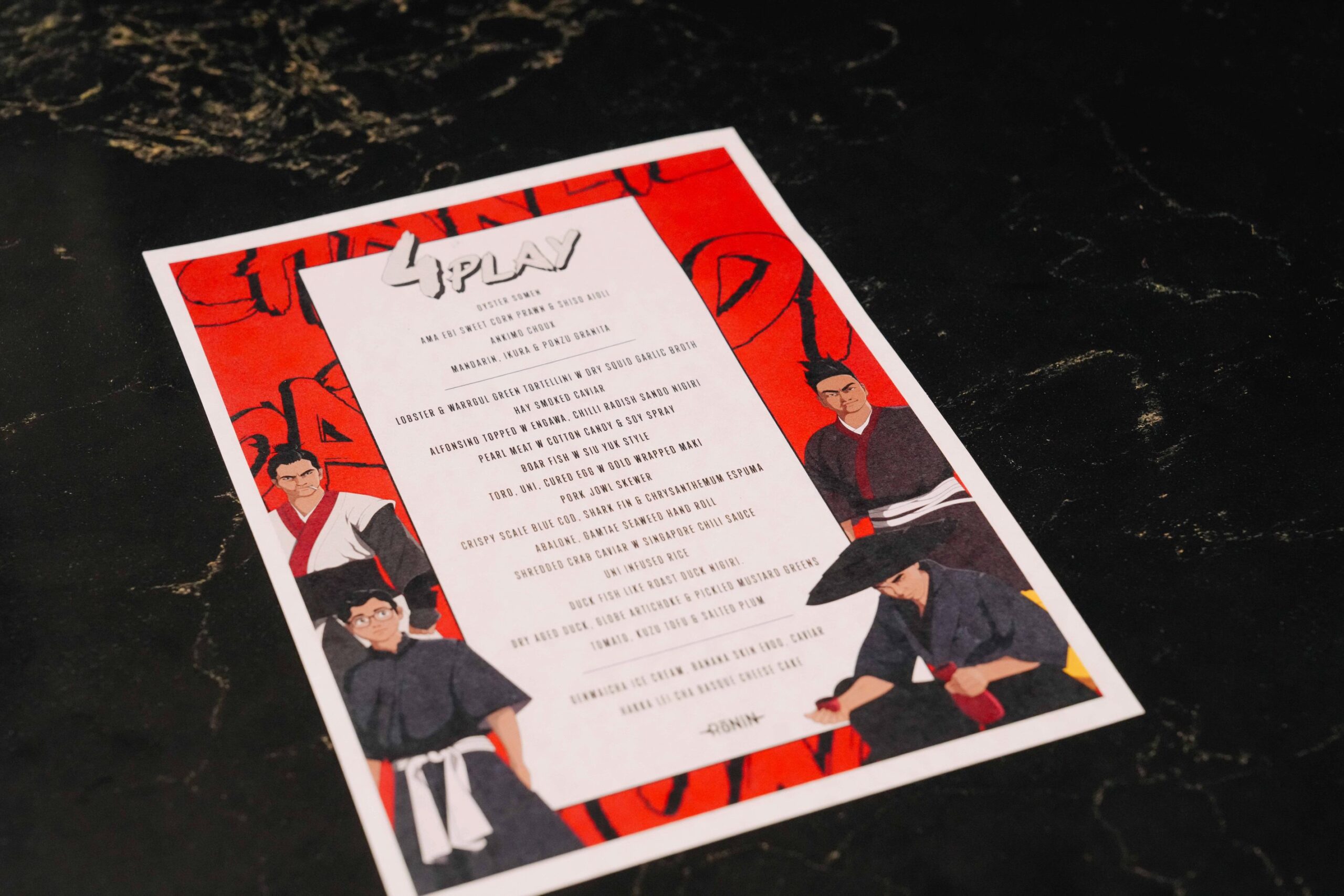
A designer with beautiful social media graphics may never have set up a die-cut box. One who produces excellent brochures may not draw logos. Before you look at style, look for work in your format: a menu if you run a restaurant, a box if you sell a product, a catalogue if you supply trade customers. The Rōnin menu card pictured above, for example, had to carry illustration and a full tasting sequence on one sheet that survives a dinner service.
Ask to see printed samples, not only screen images. Paper and colour accuracy are where print design succeeds or fails, and a designer who has produced real pieces will have them in a drawer.
If you need a logo: what the best logo designers do differently
People searching for the best logo designers in Melbourne often want only the mark, and that is a reasonable purchase. A careful logo designer still asks about your business before drawing anything: who your customers are, who you compete with, where the logo will appear. They check that the name and the mark are not too close to an existing trade mark on the IP Australia register. They show the logo at the size of a favicon and the size of a sign, in one colour and in full colour.
Ask how many concepts you will see and how many rounds of changes are included. Three distinct directions refined into one is common. Twenty quick variations usually means less thinking behind each. If you need more than the mark, such as a colour palette and guidelines, you are buying a brand identity; see logo design and branding for the difference.
Print know-how and print management
A print-ready file has bleed, crop marks, the right colour mode, fonts embedded and images at full resolution. Ask whether the designer prepares files to each printer’s specifications, and whether they will check a proof before the job runs. Some designers also manage the printing: quoting with printers, choosing stock and finishes, checking proofs and dealing with problems. That costs a little more and saves a great deal when a run of brochures comes back the wrong colour.
For larger pieces such as signage, hoardings and packaging, ask whether the designer has worked with sign makers and packaging manufacturers before. Those trades have their own file requirements and tolerances, and experience saves rounds of rework.
How to brief a graphic designer
A short written brief gets a more accurate quote and a better first draft. Say what the piece is for and who will read it, the size and quantity, the deadline and the budget range. Attach the content: the menu items with prices, the product details for the box, the text for the brochure. Add two or three examples you like and one you do not, with a sentence on why. If the job will be printed, say whether you already have a printer or want the designer to arrange one. Designers can work from much less, but every gap becomes a question that adds a day.
Ownership and the files you should receive
In Australia the person who creates an artistic work, such as a logo or illustration, is generally its first copyright owner, and the Arts Law Centre’s copyright information sheet explains that these default rules can be changed by written agreement. If you want to own your logo and artwork outright, the contract should assign copyright to your business on payment. Without that, you may only have permission to use the work for the purpose it was made for.
At the end of a job you should receive the working files or editable versions where agreed, print-ready PDFs, the logo in vector format plus PNG and JPG versions, and a note of the colours and fonts used. Font licences matter too: a commercial font used in your logo or packaging should be licensed for that use.
Questions owners ask before hiring a graphic designer
Freelance graphic designer or design studio?
A freelancer suits a single, well-defined piece with a flexible deadline. A studio suits ongoing work across several formats, print management and deadlines that cannot slip, because there is more than one person to cover the job.
Do I own the logo my designer creates?
Only if the contract assigns copyright to you. In Australia the designer is generally the first owner of a logo they draw, so ask for a written assignment on payment and keep a copy with your business records.
Can one designer handle English and Chinese print?
Only if they can set Chinese type properly and someone fluent checks every word. Bilingual menus and packaging are part of our studio’s everyday work, and the two languages are designed together rather than one squeezed in after.