If your packaging, website or ads use eco friendly claims such as “green”, “sustainable” or “carbon neutral”, check them now. On 20 October 2026 the ACCC released Making emissions claims to consumers, a guide for business, and it sits on top of the regulator’s 2023 rules for environmental claims. The short version: say exactly what the benefit is, hold the evidence, explain any conditions, and make sure the colours and symbols on the pack do not promise more than the words. xCreative™ is a Chadstone studio in Melbourne that has designed brands and packaging since 2016, and this is the brief we would now give any client putting a green message on a box, a cup or a product page.
What the ACCC released on 20 October 2026
The new guide covers greenhouse gas emissions claims made to consumers. In its media release (number 119/26), the ACCC says businesses should use credible, science-based accounting, be open about any carbon credits they buy, and above all consider what an average consumer would take the claim to mean. Deputy Chair Mick Keogh asked businesses to review their consumer-facing emissions claims and to update the wording, gather stronger evidence or drop the claim if it raises concerns.
The release lists five expectations. Claims should rest on accounting that is complete and reputable, and explained clearly. They should not be highly selective, broad or vague. Emissions changes should not be counted twice. Marketing should separate what one business did from changes available to everyone and from things the law already requires. Claims about the future need reasonable grounds. Carbon credits can play a part, but if the marketing suggests that buying credits cancels out emissions, the business must have a reasonable basis for saying so.
Greenwashing has been an ACCC compliance and enforcement priority since 2023. The same release notes that the Federal Court ordered Clorox Australia to pay penalties of 8.25 million dollars over “ocean plastic” claims on some GLAD products, and that the ACCC has started proceedings against the maker of Banana Boat and Hawaiian Tropic sunscreens over “reef friendly” claims. Industry press, including Sustainability Matters, reported the guide the same day.
The eco friendly claims the ACCC asks businesses to avoid
The ACCC’s environmental and sustainability claims page names three broad terms it recommends businesses avoid: “green”, “environmentally friendly” or “eco friendly”, and “sustainable”. Its reasoning is simple. Almost every product has some impact in manufacture, packaging, delivery, use or disposal, so a word that suggests no harm is hard to back up.
The fix is usually more detail, not less ambition. The ACCC’s own examples show the pattern:
- A cosmetics bottle labelled “does not harm the environment” had a recycled bottle but an unrecycled cap and outer pack. The ACCC suggests saying it reduces harm and naming which parts are recycled.
- Picnic cutlery sold as “reusable” lasted about a week of washing. The suggested fix is to state how many times it can safely be reused.
- A service station promoted “recyclable” coffee cups that could only be recycled through its own in-store bins. Leaving that condition out was likely to mislead.
For a food, beauty or retail brand, that means a pack line such as “eco friendly packaging” becomes something you can prove, such as which component is recycled content, or where the box can be recycled.
Your design makes claims too
This is the part most owners miss, and it is where a designer earns their fee. The ACCC says graphics and visual elements can shape a consumer’s impression, and it gives green-coloured packaging and recycling logos as examples. Its coffee cup example included an image of a cup with a green halo. The overall impression counts, not only the sentence on the back.
The recycling loop gets its own warning. The ACCC says the mobius loop can suggest the product is made from recycled material, is recyclable, or both, and that without explanation people may assume it applies to the whole product and its packaging.
So the questions for a packaging or brand refresh go beyond copy. Does the palette shift to leaf green only because the range now has a recycled lid? Are leaves, globes or water drops sitting next to a product that has no measured environmental benefit? Does a loop icon appear on a pack where only the outer sleeve can go in kerbside recycling? None of these choices is banned. Each one needs to match what the business can show.
How to check a green claim before the next print run
Packaging is the expensive place to get this wrong, because the claim is printed in thousands. We would run every environmental line through these steps before artwork goes to the printer:
- List every claim, including the visual ones. Copy on the pack, the swing tag, the website product page, menus, social captions and the icons or colours that carry a green message.
- Attach the evidence to each one. Supplier certificates, test results or emissions accounts. If a claim has no document behind it, it comes off the artwork.
- Replace broad words with the specific benefit. Name the component, the share of recycled content, or the condition, such as where and how an item can be recycled.
- Put conditions where people will see them. The ACCC says small print should not contradict the main message or hide the important part.
- Treat future promises carefully. A target for 2030 needs a real plan behind it today, or it stays off the pack.
- Get advice on anything borderline. A designer can spot the risk. A lawyer, or the ACCC’s published guidance, settles it.
Where else the claim lives: the website and the shopfront
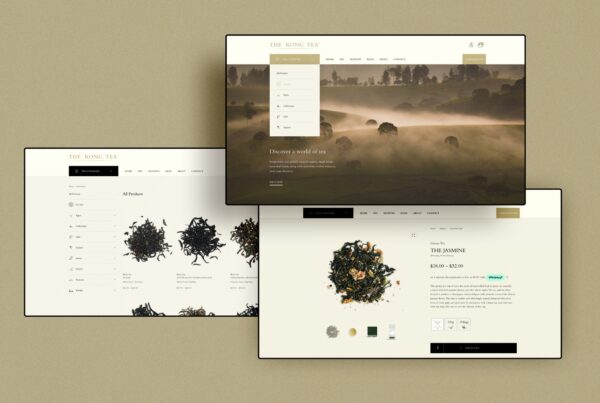
A pack rarely carries a claim alone. The same line shows up on the online store, the delivery app tile and the shop window. Our packaging design work for The Rong Tea runs from single tins up to gift sets, and the same studio photographed the products and built the online store, so one wording decision flows through every channel. That is the practical reason to fix the claim at brand level rather than on one label.
Takeaway brands face the same test at speed. TEA BAG’s cups and stickers carry its character into customers’ photos every day, and any cup claim travels with them. If you are opening a venue, add a line about environmental claims to the brand checklist to finish before the fit-out. If a refresh is already planned, our retail branding service and rebranding team can build the claim review into the brief instead of finding it at proof stage.
New names and slogans that mention “eco” or “green” also need the usual trade mark checks; our earlier piece on whether to trade mark your logo covers that step.
Frequently asked questions
Can I still say my packaging is eco friendly?
The ACCC recommends avoiding “eco friendly” because it suggests no environmental harm, which few products can show. Say the specific benefit instead, such as which part of the pack uses recycled material, and keep the evidence on file.
Does the new ACCC guide apply to small businesses?
The Australian Consumer Law rules on misleading claims apply to businesses of every size. The October 2026 guide focuses on emissions claims made to consumers, so a small brand saying “carbon neutral” or “net zero” on its packaging or website falls inside it.
Can a green colour or leaf icon on packaging be misleading?
It can. The ACCC lists green-coloured packaging and recycling logos as visual elements that shape a consumer’s impression. Check that the overall look of the pack matches what you can prove about the product.